2026 Saskatchewan First Nations Regionals Firefighter Challenge
Sept. 19th, 2026
2026 Saskatchewan First Nation Regional Firefighter competition
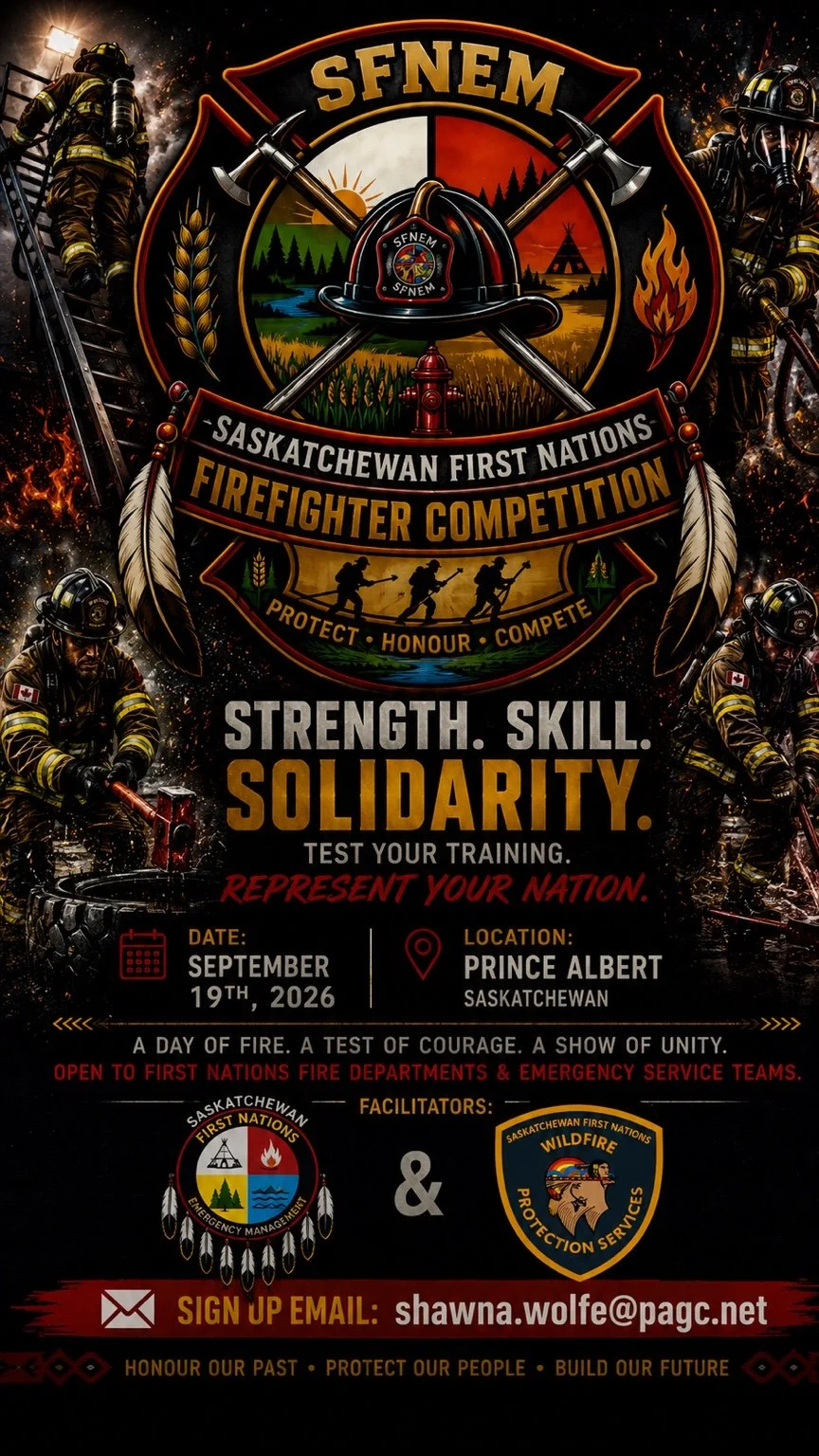
Saskatchewan First Nation Firefighter Competition
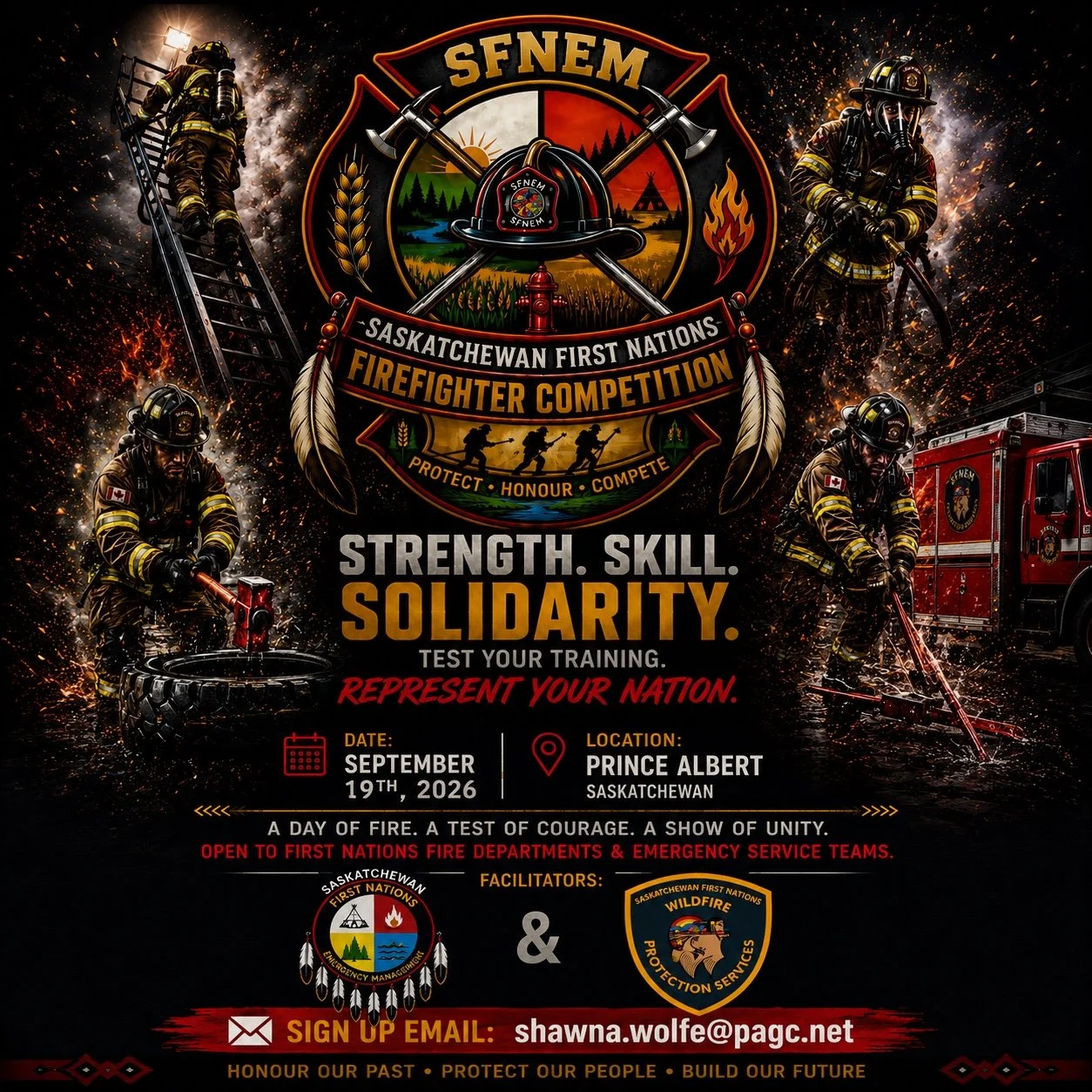
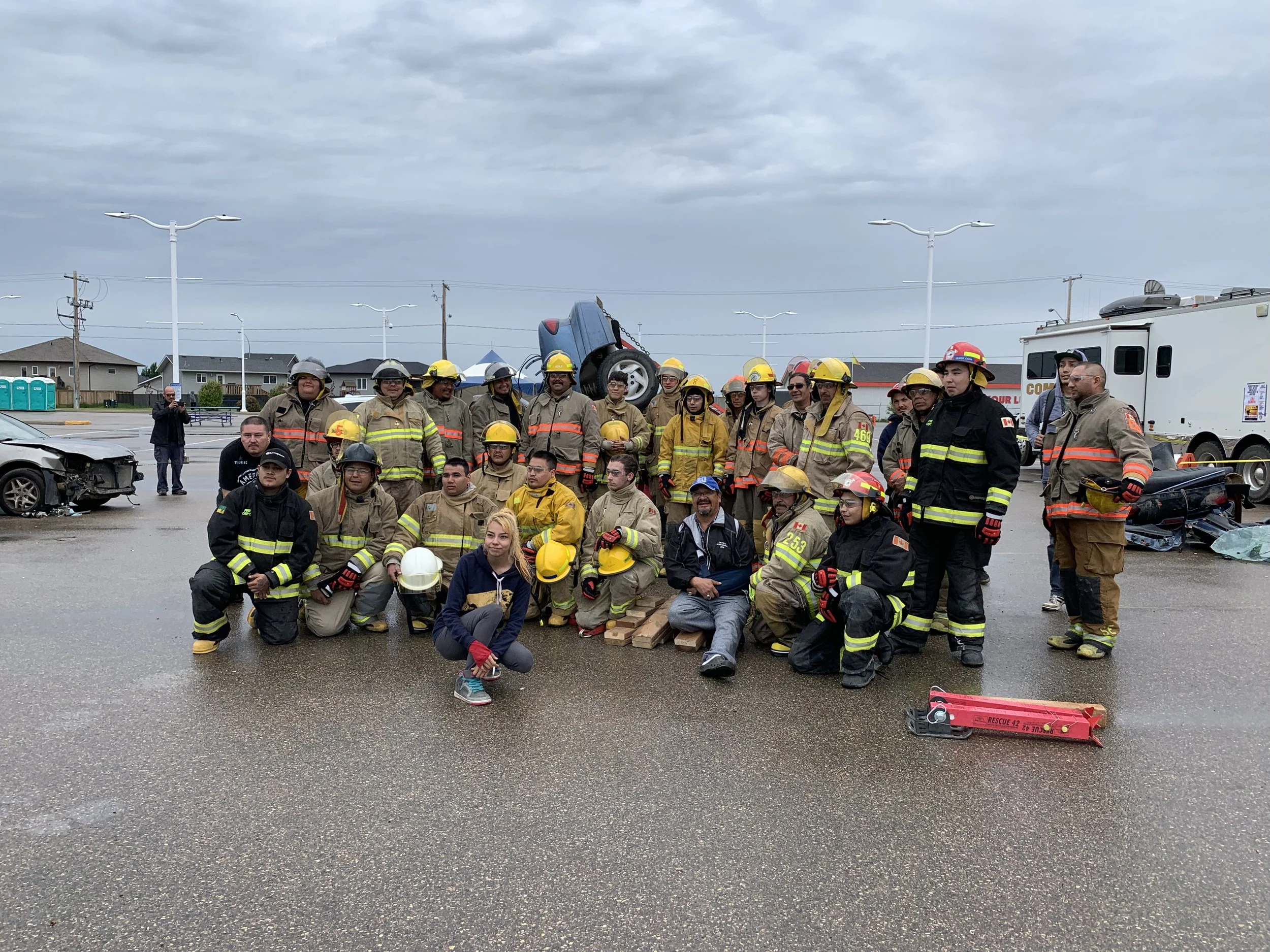
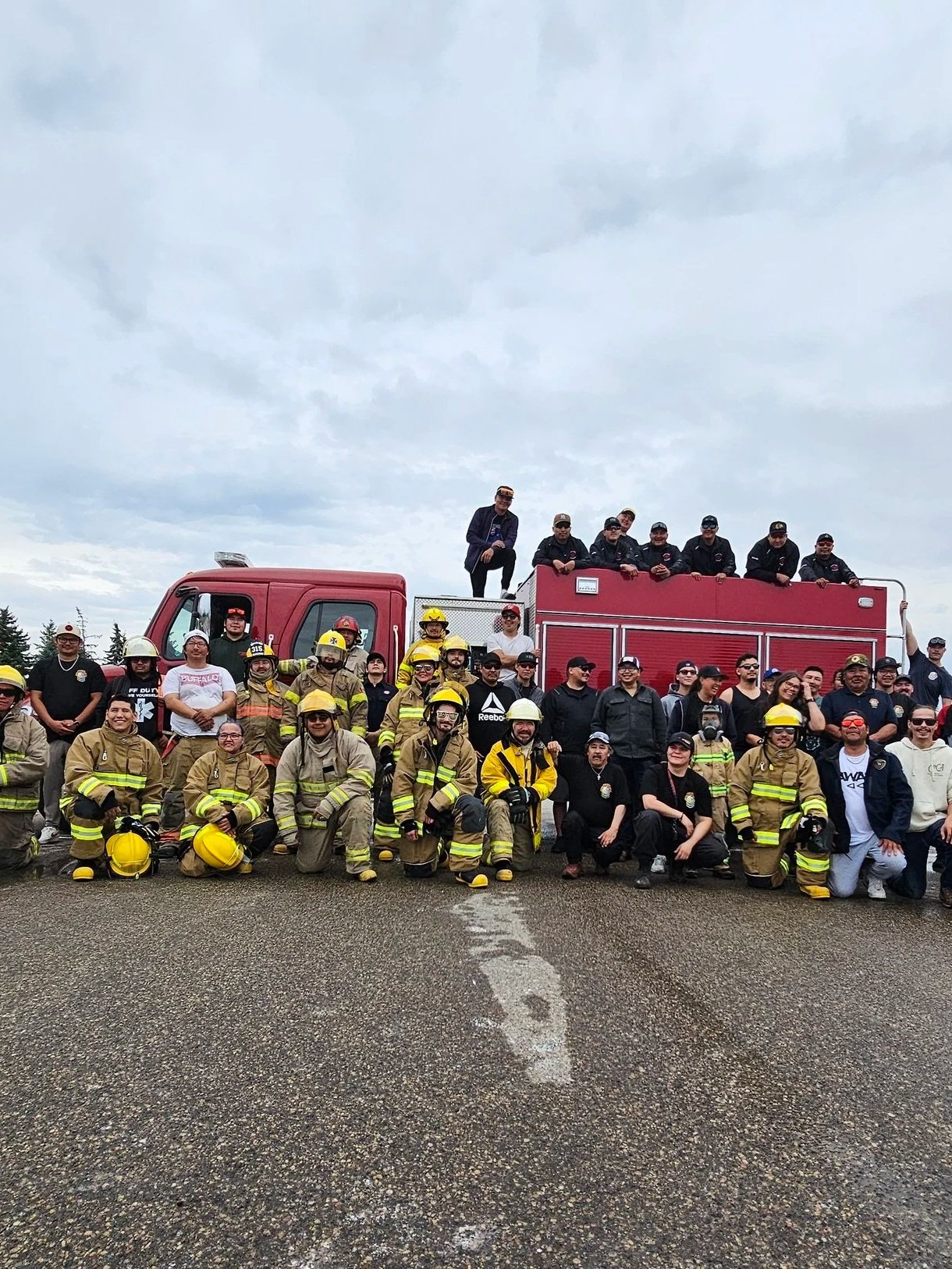
Saskatchewan First Nation Emergency Management and PAGC are bringing First Nations fire departments teams together for the 2026 Saskatchewan First Nations Regional Firefighter Competition.
This one-day event will give participating firefighters an opportunity to test their training, firefighting skills and relationships with fellow firefighters. Competitors will take part in a series of challenging events designed to highlight teamwork, physical ability, communication, problem-solving and fireground readiness.
More than a competition, this gathering is an opportunity to celebrate the dedication of First Nations firefighters and emergency responders who work to protect their communities.
Event Details
Date: Saturday, September 19, 2026
Location: Prince Albert, Saskatchewan
The competition is open to First Nations fire departments located in Saskatchewan.
Register Your Team
Sign-up email: shawna.wolfe@pagc.net
Additional information regarding competition events, team requirements, schedules and the final venue will be shared with registered participants closer to event date.
Honour our past. Protect our people. Build our future.
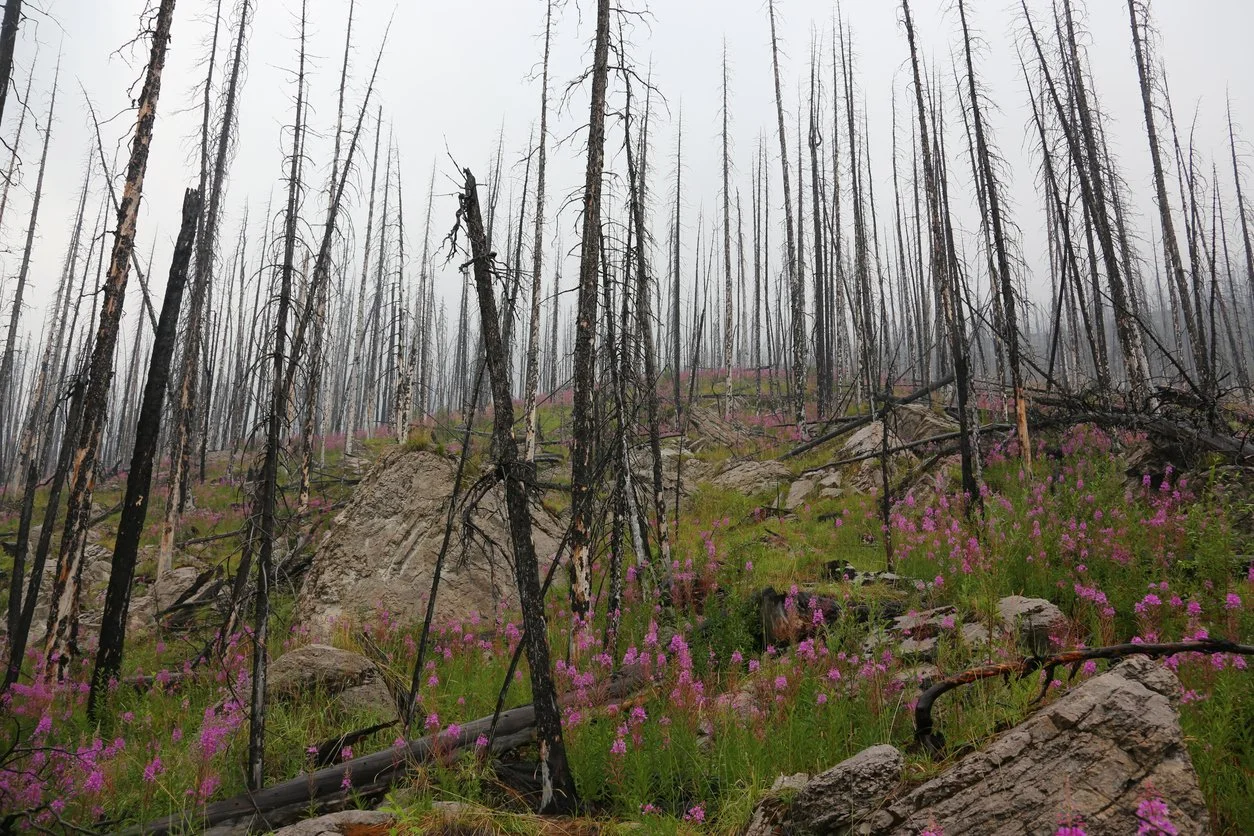
Circle of fire, circle of care: Supporting Indigenous wildland firefighter wellbeing
Indigenous communities are disproportionately impacted by wildfires, increasingly so within the ‘new normal’ of climate change-induced fire season extremes. Likewise, Indigenous individuals are increasingly being called upon by their communities and wildfire management organizations to engage in wildfire work. The organizational culture surrounding wildfire work is largely rooted in western, paramilitary values that are quite distinct from cultural burning and fire stewardship practices. Alongside colonial settlement came a devaluing of these Indigenous-led practices and a problematic history of forced/coerced wildland firefighting in Indigenous communities.
Currently, Indigenous wildland firefighters navigate this living history alongside the other considerable challenges of wildland firefighting, which include prolonged exposure to dangerous and extreme conditions, exhaustion and burnout from long, physically demanding days and suboptimal sleep, health risks due to smoke and chemical exposure, and loneliness and isolation from extended time spent away from loved ones and community. Compounding these challenges are what many Indigenous wildland firefighters report are exclusion from career advancement, incidences of anti-Indigenous racism and discrimination, and a lack of understanding and recognition of Indigenous-led cultural and fire stewardship practices.
In this panel discussion, we will examine:
The unique challenges and stressors experienced by Indigenous wildland fire fighters
Recommendations and practices for supporting Indigenous wildland firefighter cultural safety and wellness
Calls for decolonizing wildfire services, and honouring Indigenous-led fire stewardship principles in wildland firefighting
Visit: https://www.cipsrt-icrtsp.ca/en/join-us-for-a-special-two-part-discussion-on-the-impacts-of-wildfire-fighting-on-public-safety-personnel
The Impacts of Wildfire Fighting on Public Safety Personnel
‘An incomprehensibly demanding job. Extreme in every possible way.’* The impact of wildfire fighting on mental health
First responders and other public safety personnel are routinely exposed to trauma through performance of their job duties, which can in turn contribute to the development of mental health challenges like depression, anxiety, and other posttraumatic stress injuries (PTSI).
Woodland and wildland firefighters face a unique set of challenges and stressors, including prolonged exposure to dangerous and extreme conditions, exhaustion and burnout from long, physically demanding days and suboptimal sleep, health risks due to smoke and chemical exposure, and loneliness and isolation from extended time spent away from loved ones and community.
2025 has proven to be the second-worst season on record in Canada, and climate scientists warn that back-to-back extreme fire seasons is becoming a new normal, increasing demands on fire fighters and other emergency personnel.
In this panel discussion we will examine:
The unique challenges and stressors experienced by wildland and woodland fire fighters
Intersections between structural and woodland/wildland firefighting
Measures wellness experts are implementing to support wildfire fighter mental health
Calls for a national-level wildfire response and mental health supports for wildland firefighters and emergency personnel, and for incorporation of Indigenous fire stewardship principles in wildland firefighting
Visit: https://www.cipsrt-icrtsp.ca/en/join-us-for-a-special-two-part-discussion-on-the-impacts-of-wildfire-fighting-on-public-safety-personnel

Saskatchewan First Nation Emergency Management Forum
Wednesday October 29th Agenda
7:30am Pipe Ceremony
8:00am Coffee
8:15am Welcome: MC - Clarence Stonechild, Keith Pratt - File Hills Qu’Appelle Tribal Council
8:45am Drug Update & Elder Abuse on First Nations: Chelsea Naytowhow
9:45am Health Break
10:00am Red Cross Emergency Support Services: Red Cross
11:00am First Nations Wildfire Evacuation Panel: Lorne Stewart Duane Hiebert, Bonnie Austman, Keith Pratt & Candyce Paul
12:00am Lunch
12:30pm Boat Safety: Anita Champagne Gudmundson- Transport Canada
1:30pm Health Emergency Management: Jeff Wagner - First Nations and Inuit Health Branch Battle River Treaty 6 Health Centre
2:30pm Health Break
2:45pm Building Back After An Event: Akash Chitolie & Arlene Kinequon - Indigenous Services Canada
3:45pm Update From Indigenous Services Canada: Serge Beaudoin & Rob Harvey
4:45pm Closing: MC - Clarence Stonechild, Bonnie Austman - Yorkton Tribal Council
Thursday October 30th Agenda
7:30am Pipe Ceremony
8:00am Coffee
8:15am Welcome: MC - Clarence Stonechild, Bonnie Austman - Yorkton Tribal Council
8:45am First Nations Elders Panel: Ross Cadette, Clarence Stonechild, Nolan Henderson, Ernie Cook, Lenard Halkett & Elisa Bird
9:45am Health Break
10:00am Fire Guardians: Prince Albert Grand Council
11:00am The Indian Elvis Show: Ross Cadotte
12:00am Lunch
12:30pm Closing: MC - Clarence Stonechild, Bonnie Austman Yorkton Tribal Council, Keith Pratt - File Hills Qu’Appelle Tribal Council, Drum Group
Closing Prayer: Nolan Henderson

2025 SASKATCHEWAN FIRST NATION FIREFIGHTING COMPETITION
Friday, Sept. 12 – Arrival & Orientation
Team arrivals & hotel check-ins
7:00 PM – Captains’ Meeting (at SFNEM Office)
• Welcome & competition briefing
• Safety protocols
• Q&A + schedule distribution
Saturday, Sept. 13 – Competition Day
9:00 AM – Team check-in & warm-up (Carlton Comprehensive High School – North Parking Lot)
10:00 AM – Morning competition events
12:00 PM – Lunch break (onsite catering provided)
1:00 PM – Afternoon competition events
5:00 PM – 6:00 PM – Rest & Refresh
• Teams return to hotel or prepare for banquet6:00 PM – 9:00 PM – Banquet, Awards & Closing Ceremony Plaza 88 Kings Courts (back entrance)
• Dinner served
• Awards presentation: Best Overall Team
• Announcement of the Team Advancing to Nationals
Sunday, Sept. 14 – Departure
Morning – Team departures
Optional team breakfast (TBD)